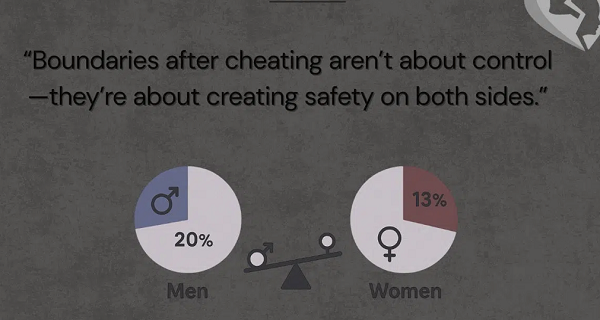
Cheating often reveals a lack of clarity around personal and relational boundaries. Given how common affairs are in various relationship settings, this stage becomes essential in defining what both partners are comfortable with going forward. Setting firm emotional, digital, and social boundaries becomes a structural step in rebuilding trust. Examples include,
2. Is forgiveness the same as reconciliation?
In the aftermath of infidelity rates, many people confuse forgiveness with reconciliation. But the two are very different. Forgiveness is an internal process. One that helps the betrayed partner release anger, resentment, and pain. Reconciliation, on the other hand, requires both partners to actively rebuild their relationship. It’s a mutual commitment to working through the damage.
3. When to get professional help
Considering how common is cheating and the emotional upheaval it causes, many couples benefit from professional guidance. Therapists offer structure and neutrality, especially when betrayal has triggered long-standing patterns of conflict. Among the statistics on cheating, it’s notable how many couples who seek therapy report progress in either reconciliation or healthy separation.
1. Who cheats more, men or women?
Overall, more men cheat than women. Approximately 20% of men versus 13% of women in marriages have admitted to infidelity. However, younger women are narrowing that gap, especially in emotionally unfulfilling relationships.
2. How common is cheating in marriage?
Cheating is more common than most people assume. About 1 in 5 married men and 1 in 8 married women report being unfaithful at some point in their relationship. Affairs are even more common in long-term, unaddressed conflict zones.
Key Pointers
- 60% of couples stay after cheating but staying is just the beginning. True recovery comes from mutual effort, accountability, and a shared desire to heal
- Therapy isn’t a last resort, it’s a lifeline. Couples who seek professional help often rediscover tools for communication, empathy, and emotional safety
- Letting go can be its own kind of healing. Not every relationship survives infidelity and that’s okay. Walking away can be the bravest and healthiest choice when trust can’t be rebuilt
- Forgiveness doesn’t mean forgetting. It means choosing peace over punishment for yourself first, and possibly for your partner too
- Boundaries become your backbone. They’re not restrictions, but reinforcement of clear lines that help both people feel emotionally secure moving forward
Final Thoughts
The question of “who cheats more men or women” doesn’t have a one-size-fits-all answer. Yes, statistics show men cheat more often—but the difference is shrinking. More importantly, the reasons behind infidelity are often rooted in emotional neglect, lack of communication, and unmet needs.
Rather than focusing solely on gender differences, it may be more helpful to explore what leads people to cheat in the first place. Because when we understand the why, we’re better prepared to prevent the what. Whether you’re healing from betrayal or trying to safeguard your relationship, honesty and empathy are always the best place to start.