
Respect your spouse as an equal, individual partner. No matter how long the two of you have been married, you’re still individuals with your own thoughts and feelings. After all, it takes two separate strings to tie a knot. Treat your spouse as your equal and don’t make assumptions about how they’ll feel about something—just ask![1]
- Respect your spouse’s privacy as well. They’re still entitled to privacy even though you’re married. If you go snooping, they’ll feel violated and will likely think you don’t trust them.
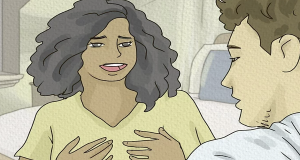
Focus on the present and the future rather than the past. Conflict is inevitable in any relationship. When you have a disagreement and come to a resolution, move on. Continuing to harp on the past isn’t considerate of your spouse and their ability to progress and grow.[2]
- Part of keeping your relationship in the present is learning to forgive your spouse. Learn what you can from mistakes and let it go.[3]
- Show forgiveness by not bringing up a problem again once it’s been resolved. Continuing to harp on an issue tells your spouse that you’re still holding a grudge.
Listen to your spouse actively and pay attention to them. When you ask your spouse about their day, listen to what they have to say rather than zoning out. Show them that you actually care about what they’re saying.[4]
- Ask open-ended questions to show that you’re interested in what they’re talking about. Having a conversation like this also helps you learn more about your spouse and their life.
- Avoid the impulse to try to fix every problem they bring up—sometimes they just want to vent. If you’re not sure what they need from you, ask: “Are you looking for solutions or do you just need me to listen?”
- Reader Poll: We asked 209 wikiHow readers and 53% of them agreed that the best way to connect with a partner is to listen openly and patiently to their feelings and thoughts. [Take Poll]
-
Make your spouse a priority in your life. Your spouse wants to feel as though they’re more important than your job or other people in your life. This doesn’t mean that your life revolves around your spouse—it just means that you think about them when making any decisions. How your decision will affect your spouse is just as important as how it will affect you.[5]
- For example, you might consult your spouse before you accept a new position at work. Talk about how it will affect your responsibilities and time commitment. This shows them that you prioritize them and care about their opinion.
- If there’s a conflict between your spouse and your family, talk it over with your spouse so you can present a united front.
Maintain strong communication with your spouse. Open and honest communication is important in any partnership, but especially in a marriage. Check back in with your spouse rather than letting things get swept under the rug—it shows that you truly care about them.[6]
- When you have disagreements, stick to the topic at hand and avoid lashing out at your spouse personally.
- Use “I” statements to communicate your feelings without blame. For example, you might say, “I feel upset when you don’t reply to my texts,” rather than saying, “You make me angry when you don’t reply to my texts.”
- If you feel yourself getting emotionally heated, take a time out away from the conversation and agree to talk about it later after you’ve cooled down.
Keep marital confidences and avoid weaponizing them. When your spouse shares something with you that’s private and personal, you betray that trust when you share the information with someone else. Likewise, bringing up something painful and personal in the midst of an argument makes your partner feel as though they can’t trust you.[7]
- If your spouse tells you something deeply personal and then you turn around and use it against them in a later argument, they’ll feel as though they can’t be vulnerable with you in the future. This can seriously erode your emotional intimacy with your spouse.
- If you make a mistake and bring up something that you shouldn’t have, be accountable for your mistake and apologize for it. For example, you might say, “I never should’ve brought up your sister. I know you’re upset about that relationship. I’m sorry.”
Pay attention to your spouse’s moods so you can respond supportively. Your spouse’s body language, tone, and facial expressions can tell you a lot about what’s going on in their head. When you show empathy, your spouse feels safe around you and knows they don’t have to hide their thoughts or feelings.[8]
- If you’re in a social setting and you notice that something about your spouse seems off, pull them aside and talk about it privately. Give them your undivided attention and support them if they’re uncomfortable or want to leave.
- For example, you might say, “You seem tense lately. Is there something stressing you out that you want to talk about?”
- Empathy also plays a crucial role in your communication with your spouse. When you understand how they’re feeling, you can respond to them more effectively.[9]
Take responsibility for your own actions. Being accountable to your spouse is an important part of being considerate of their thoughts and feelings. While it can be difficult to admit when you were wrong about something, owning what you said or did is necessary for you to grow stronger and closer as a couple.[10]
- When you make a mistake (it happens!), apologize sincerely and talk about what you’ll do to keep it from happening again.[11]